
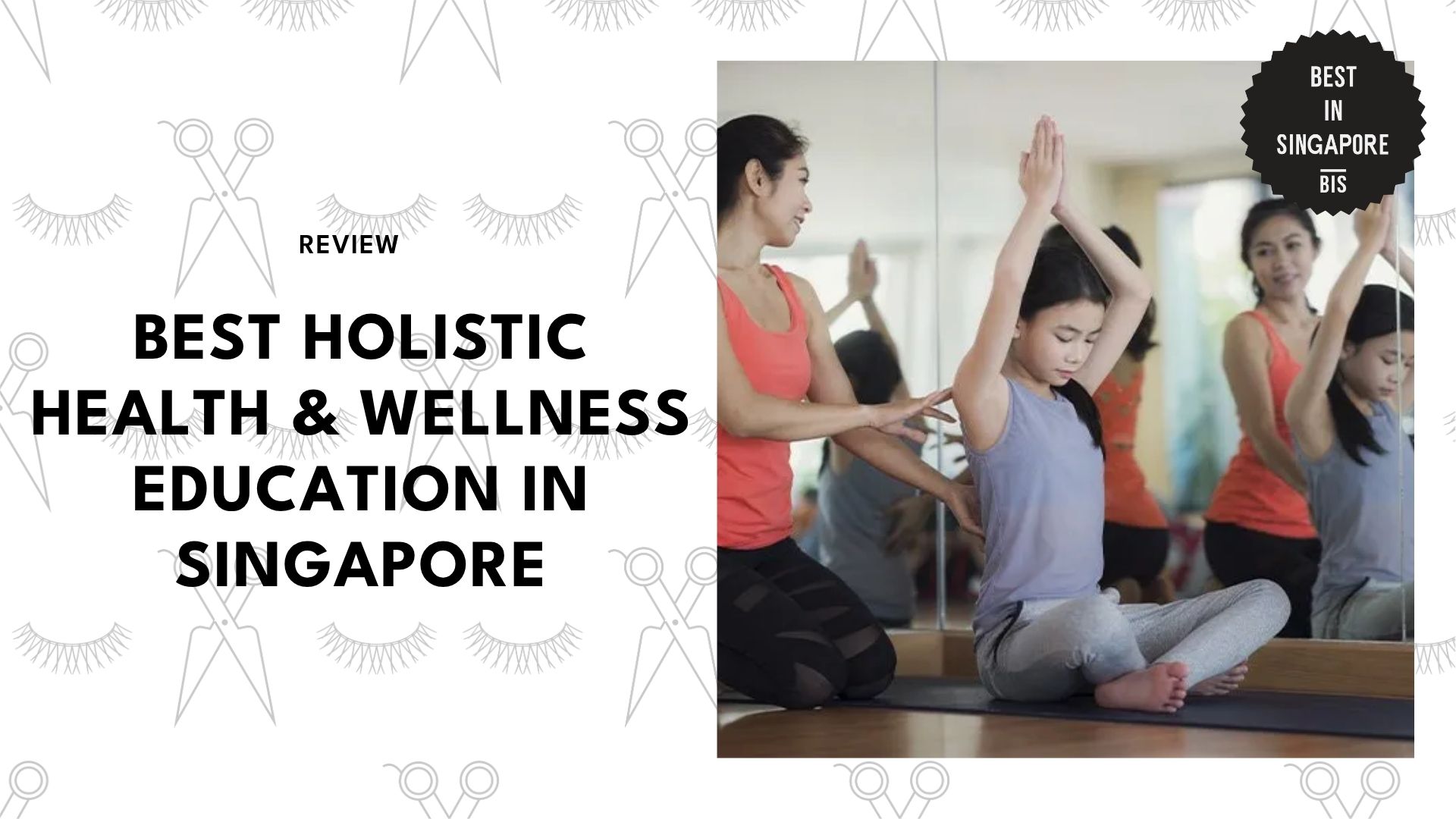
5 Best Holistic Health & Wellness Education Centres in Singapore Balancing Theory & Practice
As I’m getting older, I’ve been looking for ways to manage stress and my diet. There’s also the enigma of those people who seem to have it all together and meditate. How can I be more like that?
I realised traditional schooling alone wasn’t enough. I want to learn skills that keep both my mind and body strong.
That’s when I started looking into holistic health and wellness education in Singapore. These places go beyond books, teaching practical ways to balance wellness in everyday life.
How much does holistic health & wellness education cost in Singapore?
Holistic health and wellness courses can cost anywhere from S$420 for short workshops to around S$2,500 for professional health coach certifications. Longer certificate programs at institutions like SMU are priced at around S$3,400 after subsidies.
1. International College of Holistic Health
Address: 716a Geylang Road
Contact: +6589091778
Hours: Monday to Friday, 10 AM–7 PM
I first discovered the International College of Holistic Health (ICHH) while searching for structured training beyond casual workshops for my wife and me. What caught my attention was their accreditation with VTCT and iTEC, which lends international credibility to their courses.
The college offers an excellent nutrition curriculum that covers a broad range of topics, including nutrition theories, application, disease management, and wellness food preparations, as well as counseling skills training. This ensures that students not only study theory but also practice real techniques in class.
The trainers have years of clinical and teaching experience, which gives students like us confidence in their guidance. They emphasize both Eastern and Western approaches, providing a well-rounded learning experience.
Another advantage for us was the flexibility they offer. The center provides part-time schedules that accommodate our work and family life.
The pricing is reasonable considering the comprehensive training and international certification. A potential drawback is that the classes tend to fill up quickly because the college enforces a cap on each intake to maintain an appropriate student-to-teacher ratio, ensuring that every student receives adequate attention. As such, potential students will be on waiting list once the intake reached the maximum capacity
I gained valuable knowledge and built confidence
I truly loved my experience at ICHH School. The environment is very welcoming, and the learning journey was not only enriching but also inspiring. I gained valuable knowledge, built confidence, and felt supported every step of the way. I’m grateful for the teachers, classmates, principal, management and the opportunities I encountered here. ICHH School has been a meaningful part of my growth, and I’ll always treasure this experience.
– Zhandee Madrigral, Google Review
2. Ryana Yusoff Holistic Coaching
Address: 10 Winstedt Road
Contact: +6587689480
Hours:
Monday to Friday, 11 AM–9 PM
Saturday to Sunday, 11 AM–6 PM
I watched my wife sign up for Ryana Yusoff Holistic Coaching because she wanted more than just a stress management course. Work was getting to her, so of course, I supported her decision.
After she attended her first session, she told me how the NEBA coaching framework blended emotional healing, hypnotherapy, and energy work in a way she hadn’t encountered before.
Ryana integrates mindfulness, sound healing, NLP, polyvagal theory, and somatic approaches in their curriculum, so it isn’t just one modality. Beyond surface techniques, her program emphasises working with subconscious blocks and limiting beliefs.
The trainers are led by Ryana herself, who is a certified hypnotherapist and transformation coach with experience in both corporate and individual settings. She has worked with clients from Google, SMU, and Novartis to add credibility to her approach.
She liked how the sessions are offered 1-on-1 or in small groups, and programs can adapt to one’s pace. The intimate format ensures deep engagement rather than a diluted mass experience.
If there’s an issue, it’s that Ryana’s style leans heavily on emotional and energetic coaching, so those expecting purely physical or nutrition-based modules might find the scope narrower than with broader holistic schools.
I am incredibly grateful to have Ryana’s guidance on this journey
Ryana is an exceptional hypnotherapist and coach. Through our sessions, she has helped me uncover the roots of my thought patterns, tracing them back to childhood happenings that created certain beliefs. What truly sets her apart is her ability to not only identify these deep-seated issues, but also provide practical, effective tools and strategies – allowing me to navigate through triggers, feel safe within and cultivate a greater sense of well-being. It’s always a work in progress, and I am incredibly grateful to have Ryana’s guidance on this journey. I would highly recommend Ryana to anyone seeking profound personal growth.
– Adeline Toh, Google Review
3. Soha Institute
Address: 1 N Bridge Rd, #03-11 High Street Centre
Contact: +6580756331
Hours:
Monday to Friday, 2–7.30 PM
Saturday to Sunday,10 AM–5.30 PM
It was at Soha Institute where my kid sister enrolled for massage courses, as she was curious whether it would live up to its claims. She came back a few days after, saying how their iTEC-accredited Holistic Massage Diploma had a great mix of theory and applied practice.
Soha also offers meridian acupressure, Tuina, sports massage, diet and nutrition, reflexology, and beauty and body therapies in the same school. Suffice it to say, my self-care-loving sister blew a gasket looking at the curriculum.
The Full Holistic Massage Diploma cost her around S$3,460 with assessment, registration, and kit costs included. It wasn’t cheap, but she was delighted with the mix of Eastern and Western modalities and the options for classroom and online modules.
However, seats fill up fast, especially for diploma courses, so you’ll need to time your enrollment accordingly. And while the depth is a strong point here, some students may find the jump between foundational and advanced modules quite steep.
Mr Khoo demonstrated deep knowledge, patience, and professionalism
I recently completed the Holistic Massage Diploma course under the guidance of Mr Khoo, and it has been a truly rewarding experience. Mr Khoo demonstrated deep knowledge, patience, and professionalism in his teaching. His lessons were clear, structured, and easy to follow, which made even the more complex techniques simple to understand. I especially appreciated how he always took the time to explain the theory behind each massage technique, not just the practical steps. Thank you, Mr Khoo, for your dedication and passion in teaching.
– Syed Zaki, Google Review
4. Singapore University of Social Sciences Health and Wellness Coaching
Address: 463 Clementi Road
Contact: +6563309111
Hours: Monday to Friday, 8.30 AM–5.30 PM
My wife and I have been secretly watching our teenage daughter pore over the SUSS Health & Wellness Coaching syllabus and have been asking ourselves if this could be her career path.
The modular course, PSY475 (6 months), offers structured training in motivational interviewing, behaviour-change models, and health literacy. The curriculum is grounded in evidence and developed within a university setting, not just as a standalone wellness school.
We like how SUSS has partnered with NHGP Primary Care Academy to anchor coaching skills in real healthcare settings, so students are given exposure to clinical workflows. The instructors are also backed by academic credibility and integrate theory with hands-on coaching practice.
We find the flexibility decently suited to working adults or students fitting into broader studies (as is the case with our daughter). But because it’s a relatively new program, there’s less track record or alumni feedback to lean on.
Moreover, the program is quite academic and may feel less experiential or holistic compared to wellness centres with embodied practice. It could also lack depth in modalities like energy work, body therapies, or nutrition beyond the coaching framework.
Interesting curated courses on the humanities
Good setup with interesting curated courses on humanities and social impact drivers.
– Shrihare Mahale, Google Review
5. Society of Behavioural Health Singapore
Address: 12 Science Drive 2, #10-01
Contact: [email protected]
Hours: Check upcoming events here
I’ve sat through several Society of Behavioural Health webinars, and I guess the reason I keep returning is that it frames behavioural health not just as theory, but as applied science in public life.
Their Health Coaching Chapter and standards portfolio route is unique. They don’t just host talks; they build credential pathways. SBHS convenes a strong network of professionals, with an executive team that includes public health physicians, behavioural scientists, and coaches.
Their webinars are frequent, often free, and cover timely topics like AI in therapy, hormone health, and behaviour change. Plus, their Annual Scientific Meetings draw local and international experts to combine research, practice, and community perspectives.
Moreover, because they are affiliated with the International Society of Behavioural Medicine (ISBM), their reach and legitimacy extend beyond Singapore.
The society’s strength is in breadth and connectivity, though, so it is less of a hands-on training centre. As well, those seeking deeply embodied or therapeutic certificate work might find SBHS more oriented to theory and standards than day-to-day applications.
Clear message to practice social responsibilities
Clear explanation of flattening the curve by social distancing and have a message to practice social responsibilities, including the younger population and all age groups.
– Naing Oo Tha, Facebook Review